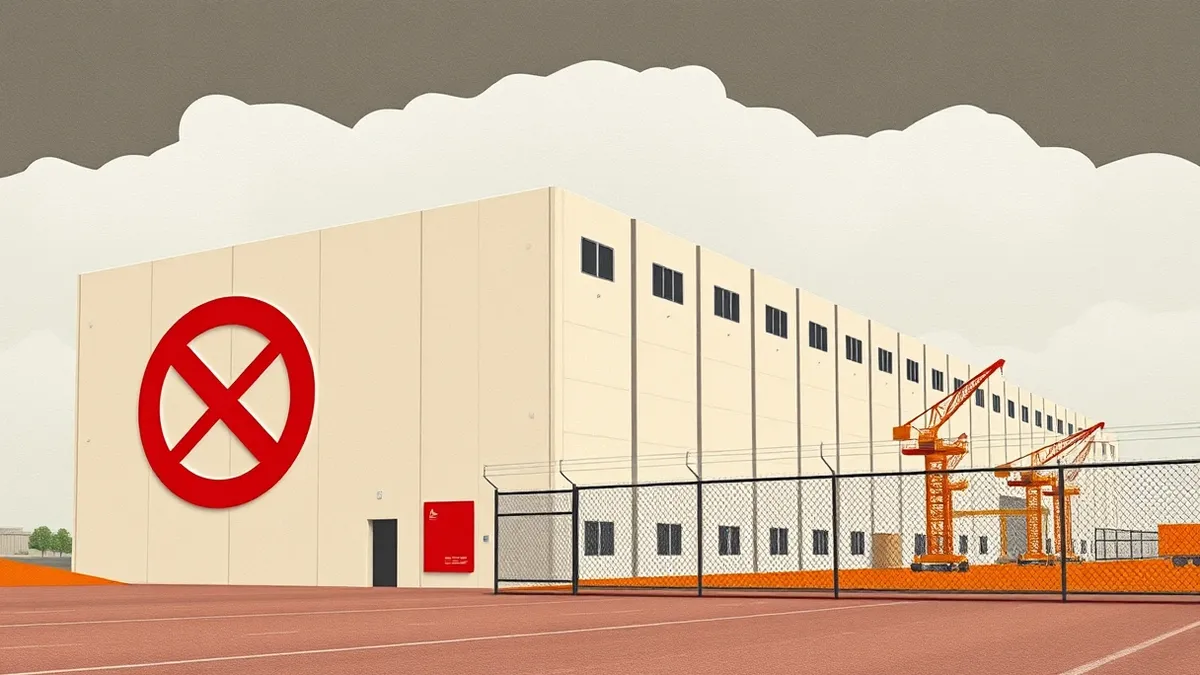
Key points
- Dozens of measures limiting datacentre expansion were passed in the recent US midterms.
- Anti-AI sentiment appears to have punctured the narrative sustaining the market boom.
- The cost of living squeeze and AI concerns drove a Democrat wave in the election.
Recent US midterm election results have accelerated a broader social and political reconsideration of artificial intelligence infrastructure. Voters in dozens of jurisdictions passed measures specifically calling for limits on the expansion of datacentres, according to the published reportreportedVoters in the US have passed new rules to stop the rapid growth of large computer facilities used for AI.Midterm outcomes indicate a regulatory pivot, with dozens of jurisdictions enacting constraints on datacentre expansion.
Evidence: reported
1-0 to humankind? US midterms vote puts AI, datacentres and the broligarchy back in their boxaifleet-guardian
The evidence
The Guardian AI reported that anti-AI sentiment was evident in last week’s results, challenging the narrative that debt-funded datacentre expansion is inevitable.reported Texas senator-elect James Talarico cited a campaign anecdote where a mother complained that lights from a neighbouring datacentre were so bright her son believed it was daytime at night.
Evidence: reported
1-0 to humankind? US midterms vote puts AI, datacentres and the broligarchy back in their boxaifleet-guardian
The decision
Election outcomes suggest that the unchecked expansion of power-hungry facilities is no longer politically viable in many areas. The Guardian AI noted that reining in these mega-sheds became a rallying cry for candidates, indicating a shift in local regulatory tolerance for large-scale tech infrastructure projects.
What the evidence means
The feasibility of carpeting the US with new datacentres appears reduced following the vote. The Guardian AI argued that the narrative linking AI demand to necessary infrastructure growth has been punctured, as voters reject the trade-offs between economic promises and local disruptions caused by these facilities.
What builders can do with it
Developers must account for increasing regulatory friction when planning infrastructure-heavy AI applications. The documented political pushback suggests that deploying models requiring massive, localised compute resources may face stricter zoning or power constraints. Builders should prioritise efficiency and distributed architectures, as the assumption of unlimited, debt-funded datacentre expansion is no longer a given for project viability.
Why it matters
- Policy readers can expect tighter local regulations on datacentre siting and power usage.
- The political narrative supporting rapid AI infrastructure growth has weakened significantly.
- Developers face higher uncertainty regarding long-term infrastructure availability and costs.
- Public sentiment against tech expansion may influence future federal or state-level legislation.
Topics: AI policy, datacentres, US elections, infrastructure, regulation
Updated
Then / now / next
The market boom was sustained by a narrative of inevitable, debt-funded datacentre expansion.
Election results have punctured that narrative with passed limits on datacentre growth.
It remains to be seen whether the tech sell-off will resume following the midterms.
Story timeline
- Then The market boom was sustained by a narrative of inevitable, debt-funded datacentre expansion.
- 08 Nov 2026 1-0 to humankind? US midterms vote puts AI, datacentres and the broligarchy back in their box
- Now Election results have punctured that narrative with passed limits on datacentre growth.
- Next It remains to be seen whether the tech sell-off will resume following the midterms.
The strongest doubt
Counterpoint from the sources
The Guardian AI noted that the cost of living squeeze from Trump’s war in Iran was also a big driver of the Democrat wave, suggesting AI was not the sole factor.
For readers
Policy
- Dozens of new limits on datacentre expansion were passed.
- Anti-AI sentiment is now evident in electoral results.
Developers
- Infrastructure planning must account for political pushback.
- The narrative of unlimited datacentre growth has weakened.
Investors
- The tech sell-off may resume as market narratives shift.
- Debt-funded expansion models face increased political risk.
Ask the article
Local keyword search of this article; no generated answers.Did this article give you the evidence you needed?
Your choice stays on this device. No public tally.Questions readers ask
What specific measures were passed regarding AI infrastructure?
Dozens of measures calling for limits on datacentre expansion were passed in the US midterms.
Did the election results affect Donald Trump's political standing?
The results did not cow Donald Trump, but they served as a wake-up call for tech leaders.
What drove the anti-AI sentiment in the election?
Factors included the cost of living squeeze, local disruptions from datacentres, and tech wealth inequality.
Connected stories
Reading receipt
- Dozens of measures limiting datacentre expansion were passed in the recent US midterms.
- Anti-AI sentiment appears to have punctured the narrative sustaining the market boom.
- The cost of living squeeze and AI concerns drove a Democrat wave in the election.